



Research suggests that low vitamin D levels are more common in people with acne than in those with clear skin, and that the two are likely connected through inflammation and immune function. A meta-analysis published in the journal Dermatology found that vitamin D deficiency was nearly three times more prevalent in acne patients than in healthy controls. That said, the science is still evolving — the relationship between vitamin D levels and acne severity is complex, with some studies showing no significant correlation. This article walks you through what we know, what we don’t, and what practical steps make sense.

Key Takeaways
- Acne patients have serum vitamin D levels significantly lower than those of healthy controls and are three times more likely to be deficient.
- Vitamin D deficiency is more frequent in people with acne, and blood levels of the vitamin are inversely correlated with acne severity, especially in those with inflammatory lesions.
- Vitamin D supports the skin through anti-inflammatory, antimicrobial, and sebum-regulating pathways — but it is not a standalone acne treatment.
- The official Tolerable Upper Intake Level (UL) for adults is 4,000 IU per day. Doses above this should only be used under medical supervision.
- Getting a blood test before supplementing is the smartest first move, so you know whether a deficiency is actually involved in your breakouts.
How Does Vitamin D Affect Acne? Understanding the Skin Connection
Think of your skin as a tiny immune outpost. It needs constant signals to fight bacteria, calm inflammation, and keep oil production in check. Vitamin D plays a central role in sending those signals. Vitamin D is a fat-soluble vitamin that is naturally present in a few foods and produced endogenously when ultraviolet rays from sunlight strike the skin and trigger vitamin D synthesis. Once activated, it behaves more like a hormone than a vitamin, binding to receptors throughout the body — including the skin.
Vitamin D receptors in sebocytes and keratinocytes
Vitamin D receptors have been identified in human sebocytes (the cells that produce skin oil) and research shows that vitamin D can modulate lipid and cytokine production, suggesting a possible association between vitamin D and acne pathophysiology. Think of these receptors like a lock, and vitamin D as the key. When enough of the key is present, the lock opens and the skin’s oil-regulating and immune processes run more smoothly.
The antimicrobial peptide connection
The biologically active form of vitamin D, calcitriol (1,25-dihydroxyvitamin D), facilitates keratinocyte differentiation and upregulates the synthesis of key antimicrobial peptides, including cathelicidin and defensins, which are essential components of the skin’s innate immune defense. Research has found that the application of vitamin D in cultured sebocytes promotes the expression of cathelicidin — a natural antibiotic-like protein that may help keep acne-causing bacteria in check. This is a lesser-known but fascinating mechanism: your body literally makes its own antimicrobial compounds using vitamin D as the trigger.
Anti-inflammatory and anti-comedogenic properties
Evidence has accumulated describing the comedolytic (pore-clearing) properties of vitamin D, its role as a modulator of the immune system, a regulator of the proliferation and differentiation of sebocytes and keratinocytes, and as an antioxidant. Vitamin D deficiency is associated with a pro-inflammatory immune response and impaired regulatory T cell function — both of which can worsen acne. In plain terms: when vitamin D is low, your skin’s ability to calm down an inflammatory breakout is reduced, much like trying to put out a fire with a nearly empty extinguisher.
What Does the Research on Vitamin D and Acne Actually Show?
The evidence base is growing but still has real limitations. Most studies are observational (they look at associations, not cause and effect), and many involve small groups of participants. Here is a fair summary of where the science stands.
Studies linking low vitamin D to acne
In one case-control study, vitamin D deficiency was detected in 48.8% of patients with acne but in only 22.5% of healthy controls. The number of inflammatory lesions was significantly and negatively correlated with vitamin D concentrations, signifying a possible link between the extent of vitamin D deficiency and the degree of acne inflammation. A 2024 review published in Quality in Sport analyzed studies from 2020 onward and found a notable prevalence of vitamin D deficiency among acne patients, with several studies showing significantly lower serum 25-hydroxyvitamin D levels compared to healthy controls.
Studies on supplementation and acne improvement
In a randomized trial, improvement in inflammatory lesions was noted after supplementation with vitamin D in 39 acne patients who had a confirmed vitamin D deficiency. A 2024 study summary published by Examine.com noted that in a randomized controlled trial in adults with insufficient or deficient vitamin D levels, supplemental vitamin D reduced the recurrence of inflammatory acne lesions after treatment with topical benzoyl peroxide. And a December 2024 review highlighted that clinical trials demonstrated that topical vitamin D can effectively reduce inflammatory markers, suggesting its therapeutic potential.
Where the evidence is mixed or limited
Four studies found no significant correlation between vitamin D levels and acne severity, though two of them still showed lower vitamin D levels in the more severe degree of acne. A 2025 Mendelian randomization study — a method that uses genetic data to test for causal links — found that after eliminating outliers, no significant association was found between serum vitamin D level and acne. This kind of genetic evidence is considered stronger than simple observation, and it reminds us that the exact role of vitamin D in acne still remains unclear. More large, well-designed trials are needed before firm conclusions can be drawn. For more context on what normal and low levels mean, see our guide on normal vitamin D levels.
Can Vitamin D Deficiency Cause Acne to Get Worse in Winter?
If you notice your skin gets rougher when the days get shorter, vitamin D may be part of the reason. In winter months or in northern climates, even 15 minutes of sunlight may not generate sufficient vitamin D because the sun’s angle reduces UVB radiation. Above 40°N latitude, sunlight is too weak from October to March for your skin to make enough vitamin D, and many people’s blood levels drop significantly over the winter months. Less sun means less natural production, which means lower immune support, more inflammation, and breakouts that can worsen.
Knowing whether a vitamin D deficiency is driving your seasonal acne requires a blood test, which your doctor can order. It measures 25-hydroxyvitamin D (25(OH)D), the storage form in your body. According to the NIH Office of Dietary Supplements, levels below 12 ng/mL (30 nmol/L) are considered deficient, 20 ng/mL is considered adequate for most people, and levels above 50 ng/mL may be too high.
Can Too Much Vitamin D Make Acne Worse?
This is a question that comes up often, and it deserves a straight answer. Correcting a true deficiency is likely to help, not hurt, your skin. However, taking very high doses when your levels are already normal is a different story. Very high doses of vitamin D supplements can raise testosterone and oil production in some people, which may aggravate acne in those who are already prone to breakouts. Vitamin D is fat-soluble, meaning your body stores what it doesn’t use, so excess can accumulate over time. For more on the safety boundaries, read our full article on too much vitamin D.
Excessive vitamin D supplementation doesn’t typically worsen acne directly, but taking very high doses without medical guidance can cause other health problems including calcium imbalances, kidney issues, and nausea. The NIH Office of Dietary Supplements sets the UL (the maximum daily amount unlikely to cause harm) at 4,000 IU for adults aged 9 and up. Regimens using 10,000 IU or 50,000 IU are prescribed medical protocols — not something to try at home. If you’ve ever wondered whether vitamin D could be contributing to digestive symptoms while you supplement, our article on does vitamin D cause constipation covers that side effect in detail.
How to Get Enough Vitamin D for Healthy Skin
You have three main ways to raise your vitamin D level, each with its own trade-offs.
Sunlight
Your skin manufactures vitamin D when UVB rays hit it — no supplements needed. Sunscreen does limit the amount of vitamin D your skin produces, so brief, unprotected sun exposure in moderate amounts can help. That said, for someone with acne, sun exposure may worsen breakouts in the short term while increasing photodamage and premature aging in the long term, so it isn’t the ideal strategy for acne-prone skin. If you use sunscreen consistently (as dermatologists recommend), vitamin D supplementation sidesteps this conflict entirely.
Food sources
| Food | Approximate Vitamin D per Serving |
|---|---|
| Salmon (3 oz, cooked) | ~570 IU |
| Canned tuna (3 oz) | ~150 IU |
| Fortified milk (1 cup) | ~120 IU |
| Egg yolk (1 large) | ~40 IU |
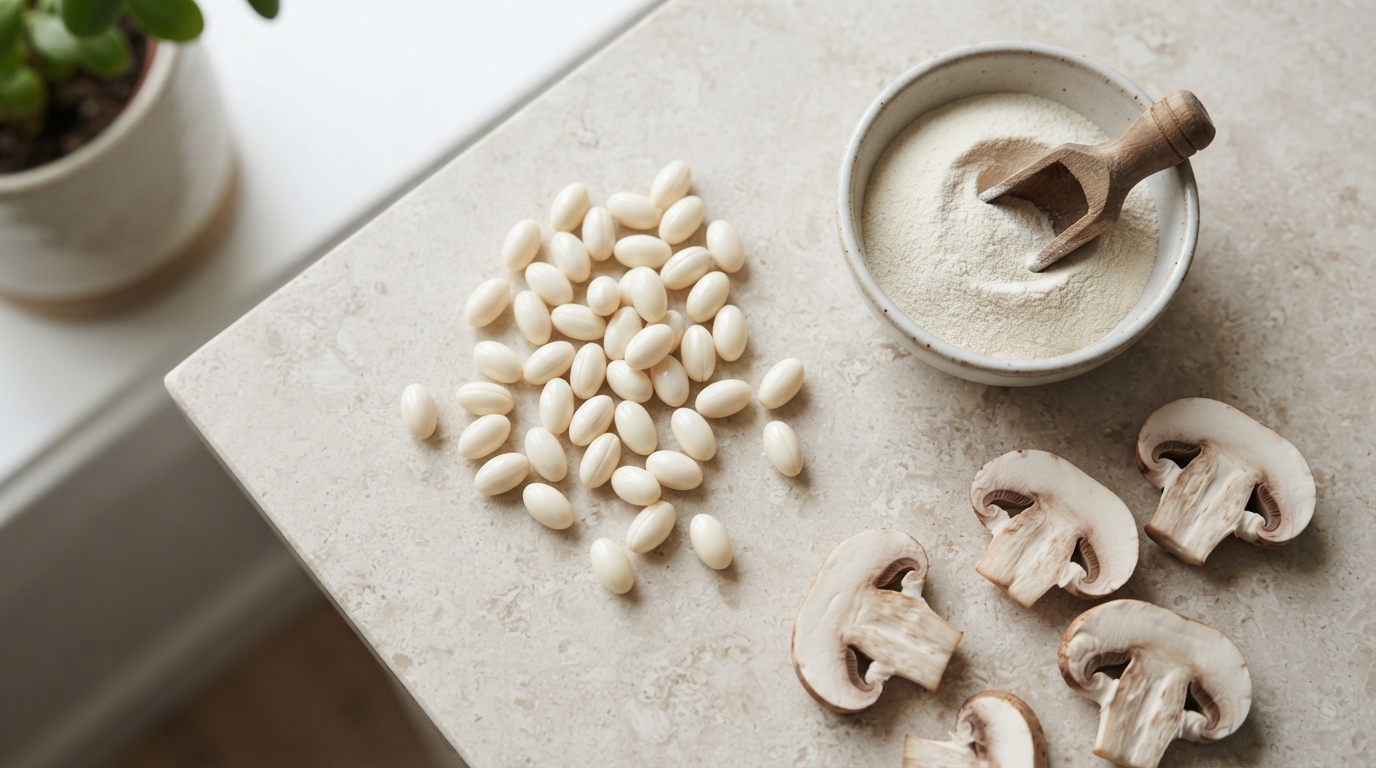
| Mushrooms exposed to UV light (½ cup) | ~366 IU |
There are limited numbers of natural foods that contain a sufficient amount of vitamin D. Even a diet rich in fatty fish and fortified dairy rarely delivers the full RDA on its own. The NIH Office of Dietary Supplements sets the RDA at 600 IU for adults aged 1–70 and 800 IU for those over 70.
Supplements
Vitamin D is present in dietary supplements as either vitamin D2 or vitamin D3. D3 (cholecalciferol) is the form most research focuses on, and it is generally considered more effective at raising blood levels than D2. Take vitamin D supplements with a meal that contains some fat, since it is fat-soluble and absorbs best alongside dietary fat. Some people ask whether timing matters for other reasons too — if you’ve seen mentions of vitamin D and sleep, our piece on does vitamin D keep you awake addresses that concern directly. And if you’re wondering whether an older bottle is still good, check out does vitamin D expire for a practical answer.

Is There a Specific Vitamin D Dose That Helps With Acne?
There is no officially approved vitamin D dose for acne — the research doesn’t yet support a specific prescription. What the evidence does suggest is this: correcting a confirmed deficiency is what appears to help, not adding megadoses on top of normal levels. A randomized controlled trial published in 2016 found that a low dose of vitamin D (1,000 IU/day) had a treatment effect on acne in deficient patients. This is a remarkably modest amount — roughly half of what you’d get from a brief session of midday sun on a summer day.
The safe approach for most adults is to stay within the official guidelines. The NIH Office of Dietary Supplements confirms the UL for anyone aged 9 and older is 4,000 IU per day. If a blood test shows severe deficiency, your doctor may prescribe higher corrective doses — but this is a supervised medical decision, not a self-care plan. Because the vitamin is fat-soluble and builds up over time, taking more than you need doesn’t speed up results; it just increases risk. If you’ve seen discussions about whether 10,000 IU of vitamin D is safe, our dedicated article covers the evidence on that question carefully.
Some people also ask about topical vitamin D for acne. Sebocyte cells have been identified as responsive target cells for the active form of vitamin D, suggesting that vitamin D analogs may be effective in the treatment of acne. However, prescription vitamin D analogs (like calcipotriol) are medicines regulated by the FDA — they are not the same as the vitamin D in your supplement bottle and should only be used under a doctor’s care.

Vitamin D, Mood, and the Acne–Stress Cycle
Here’s an angle that most articles overlook. Acne and stress have a well-known two-way relationship: stress worsens breakouts, and breakouts worsen mental health. Vitamin D plays a role in this loop too. Patients with severe acne may be subject to more psychological stress and may tend to avoid spending extended periods outdoors, which suggests a possible explanation for why people with severe acne also have lower vitamin D levels. In other words, the acne itself may keep you indoors and away from sunlight — which then lowers your vitamin D and potentially makes the acne harder to manage. It’s a cycle worth recognizing.
Some research also points to a link between vitamin D and mood. For more on that side of the picture, see our article on vitamin D and depression. Additionally, some people who are vitamin D deficient report headaches — another connection worth exploring at our vitamin D headache page.
Practical Steps: What To Do If You Suspect Vitamin D and Acne Are Connected
- Get a blood test. Ask your doctor for a 25(OH)D test, ideally in late winter when levels are at their seasonal low. This tells you whether a true deficiency exists.
- Don’t guess on dose. If you’re deficient, your doctor will recommend a corrective dose. If you’re within range, sticking to the standard RDA (600–800 IU, depending on your age) is sensible.
- Choose a reputable supplement form. Vitamin D3 softgels or tablets from established brands are widely available. Take them with food containing fat.
- Be patient. Skin cells take about a month to regenerate. Most people begin to see a difference in skin clarity and texture after 6 to 8 weeks of consistent supplementation.
- Keep up with other acne care. Vitamin D is one piece of the puzzle. Diet, skincare routine, stress management, and — when needed — prescription treatments from a dermatologist all matter.
- Watch for other symptoms. Signs of vitamin D deficiency go beyond skin: fatigue, bone aches, and low mood are common red flags worth discussing with your doctor.
Frequently Asked Questions
Does vitamin D help hormonal acne specifically?
The studies on vitamin D and acne focus mostly on inflammatory acne vulgaris rather than specifically hormonal acne. The proposed mechanism — reducing inflammation and supporting immune regulation — applies broadly to inflammatory breakouts rather than to hormone-driven acne alone. Breakouts can reflect the combined influence of inflammation, skin immunity, barrier health, hormones, sebum, stress, nutrition, and microbiome balance, so vitamin D is best seen as one supportive factor rather than a targeted hormonal fix.
Can I get enough vitamin D from sunlight alone to help my acne?
Vitamin D does correlate with acne severity, but sun exposure is not a reliable or safe way to address low vitamin D in people with acne-prone skin. Sun exposure can temporarily worsen inflammation on acne-prone skin, and UV damage is a real concern. For people with breakout-prone skin, supplementation is generally a more controlled and skin-friendly approach to raising levels.
How long before I notice a change in my skin after starting vitamin D supplements?
Blood levels of vitamin D typically take at least 2 to 3 months to stabilize after changing your dose, according to clinical pharmacology research. Skin improvement, if it occurs, would follow the correction of the deficiency — meaning most people would not expect to see meaningful changes before 6 to 8 weeks of consistent supplementation. Results vary considerably based on how deficient you are at the start.
Can vitamin D supplements cause acne in some people?
Very high doses of vitamin D supplements can raise testosterone and oil production in some people, which may aggravate acne in those already prone to breakouts. However, this appears to be a dose-related concern rather than something that happens with standard amounts. Sticking within the official UL of 4,000 IU per day, and ideally using the lowest effective dose, helps keep this risk minimal. If you notice a new breakout pattern after starting a vitamin D supplement, review your dose with a healthcare provider.
Should I take vitamin D with vitamin K2 for acne?
Vitamin K2 is often co-supplemented with vitamin D because it helps direct calcium to bones rather than soft tissues, which can be useful when taking higher vitamin D doses. However, there is no specific evidence that the D3 and K2 combination improves acne outcomes compared to vitamin D alone. If you are taking doses above the standard RDA for an extended period, discussing K2 with your doctor is a reasonable conversation to have.
Are there other nutrients linked to acne that I should know about?
Yes. Patients with acne vulgaris also exhibit lower levels of serum zinc and selenium compared to the general population, with higher rates of abnormality especially in severe cases. Zinc is probably the most studied nutrient for acne after vitamin D, with some evidence supporting its anti-inflammatory effect. Omega-3 fatty acids have also been studied for their role in reducing skin inflammation. None of these replaces dermatology-standard treatments, but correcting nutritional gaps as part of an overall skin health plan makes good sense.
Conclusion
The connection between vitamin D and acne is real and biologically plausible, but it isn’t a simple cause-and-effect story. Decreased serum vitamin D levels in patients with acne and the negative correlation between vitamin D levels and acne severity suggest that vitamin D may play a role in the pathogenesis of acne. At the same time, more large-scale clinical trials are needed before vitamin D supplementation can be recommended as a standard acne therapy. The practical takeaway: if you struggle with persistent inflammatory breakouts, checking your vitamin D level is a low-risk, sensible step. Correcting a confirmed deficiency — through diet, modest sun exposure, and supplements within safe limits — may support clearer skin as part of a broader skin health routine. It’s not a miracle fix, but it’s a smart piece of the puzzle.
This article is for informational purposes only and is not medical advice. Talk to your doctor or pharmacist before starting any supplement, especially if you are pregnant, breastfeeding, taking medication or have a health condition.




One thought on “Vitamin D and Acne: What the Evidence Really Shows”