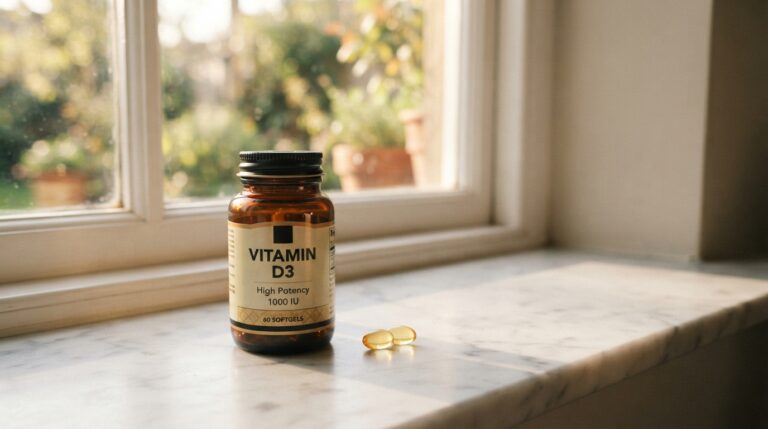



Yes, vitamin D does expire — but not the way a carton of milk does. The expiration date on your supplement bottle marks the last day the manufacturer guarantees full labeled potency, not the day the product becomes dangerous. After that date, your vitamin D gradually becomes weaker rather than harmful. Understanding this distinction helps you get the most from every capsule and know exactly when it is time to buy a fresh bottle.
Key Takeaways
- Vitamin D does expire in terms of potency, typically within two to three years from the manufacture date.
- Expiration dates are quality guarantees, not safety cutoffs — expired vitamin D rarely becomes toxic.
- The form of your supplement matters: tablets and capsules last longer than liquids and gummies.
- Heat, light, and humidity are the three biggest enemies of vitamin D shelf life — storing the supplement properly can make a real difference.
- If you rely on vitamin D to correct a confirmed deficiency, always use a fresh, in-date bottle to ensure you are getting the full dose.
What Does “Expire” Actually Mean for a Vitamin D Supplement?
Think of the expiration date like the “best by” stamp on a jar of honey. The honey does not turn poisonous overnight — it just changes in texture and flavor over time. Supplement expiration dates mark the end of manufacturer-guaranteed potency; they are quality markers, not safety cutoffs. The expiration date on a supplement label is the manufacturer’s guarantee that the product will contain at least 100% of the labeled dose until that date, when stored as directed.
While the FDA mandates expiration date listings on all prescription drugs and over-the-counter medications, supplements are separately regulated under the Dietary Supplement Health and Education Act of 1994, which does not mandate expiration dating. By regulation, if a company does state an expiration date, the ingredients must remain at label-claim levels until that defined time. In practice, most reputable brands voluntarily include a date based on internal stability testing.
There is also an insider detail worth knowing: to ensure a product meets its label claim even at the end of its shelf life, high-quality manufacturers often include a “potency overage,” meaning they might put 2,200 IU in a capsule labeled for 2,000 IU to account for the natural degradation that occurs over two years. So your supplement may start life slightly stronger than advertised.
Does Vitamin D Expire Faster Than Other Vitamins?
Vitamin D is actually one of the more stable vitamins you can take. Fat-soluble vitamins like vitamins A, D, E, and K, which dissolve in fat and are stored in body tissues, tend to have longer shelf lives. Compared to vitamin C, fat-soluble vitamins generally hold their potency better over time. Think of fat-soluble vitamins as storing their power in a waterproof container, while water-soluble vitamins like vitamin C are more like a wet paper towel — they lose what they hold much faster.
Vitamin D is relatively stable when stored properly. A 2021 study found that vitamin D3 in oil-based softgels retained over 90% potency after 2 years of storage at room temperature. Minerals and fat-soluble vitamins like D, E, and K can remain potent for years past expiration, whereas vitamin C and B vitamins lose approximately 10 to 20% potency per year.
Interesting fact: a well-known US military study analyzing 100 drug products stored past their expiration dates found that 90% retained at least 90% of their potency for an average of five years beyond the labeled expiration date, suggesting that expiration dates are often conservative estimates. While that research focused on pharmaceuticals rather than supplements specifically, it illustrates how stability testing can underestimate a product’s real-world durability.
How Long Does Vitamin D Last? Shelf Life by Form
Not all vitamin D supplements age the same way. The form you choose has a big effect on how long potency holds up. Vitamin D is a fat-soluble vitamin that is sensitive to light, heat, and air, and those three factors interact differently depending on whether your supplement is a hard tablet, a softgel, a liquid drop, or a gummy.
| Form | Typical Shelf Life (Sealed) | After Opening | Main Vulnerability |
|---|---|---|---|
| Tablets / Capsules | 2–3 years | Up to 24 months | Moisture and humidity |
| Softgels (oil-based) | 2 years | 12–24 months | Heat and oxidation of carrier oil |
| Liquid Drops | 12–24 months | 6–12 months | Light and oxygen exposure when opened |
| Gummies | 12–18 months | 6–12 months | Moisture absorption and sugar degradation |
Dry tablets and powder-filled capsules are typically the most shelf-stable. Because vitamin D3 is fat-soluble, softgels usually contain a carrier oil like olive oil, flaxseed oil, or coconut oil. While the vitamin D3 itself is stable, the carrier oils can eventually go rancid if exposed to heat or light. Gummies are prone to absorbing moisture from the air, which can cause the vitamins inside to break down much faster than they would in a dry tablet.
Once opened, the clock speeds up for every form. Most vitamin D3 tablets and softgels are best used within 6 to 12 months after opening for peak potency.
Is It Safe to Take Expired Vitamin D?
The honest answer is: probably fine for a short time, but not ideal. Taking an expired vitamin D3 supplement is almost universally safe because the molecule degrades into inactive forms, not toxic compounds. There are no documented cases of illness resulting specifically from the consumption of expired vitamin D3.
The main downside is that you may not be getting the dose you think you are. A vitamin D supplement that once delivered 2,000 IU per capsule might deliver 1,800 IU after a year past its expiration date. You are not ingesting anything harmful — you are just getting less of what you intended to take.
However, there is an important practical exception. “If you are taking a supplement for a specific medical purpose, such as vitamin D for bone health, you should avoid using expired products,” advises pharmacist Farrah Tavakoli, Pharm.D. “Reduced potency can increase the risk of deficiency.” If you are already dealing with vitamin D deficiency or trying to reach normal vitamin D levels, you need every IU listed on the label to actually show up. A degraded supplement may leave you short.
As a rough guideline: vitamin D3 is generally safe to consume for 6 to 12 months after its expiration date, but its potency will gradually decline. Vitamin D3 that is 2 years past its date has probably lost a significant amount of its potency and should be replaced.
How to Tell If Your Vitamin D Has Gone Bad
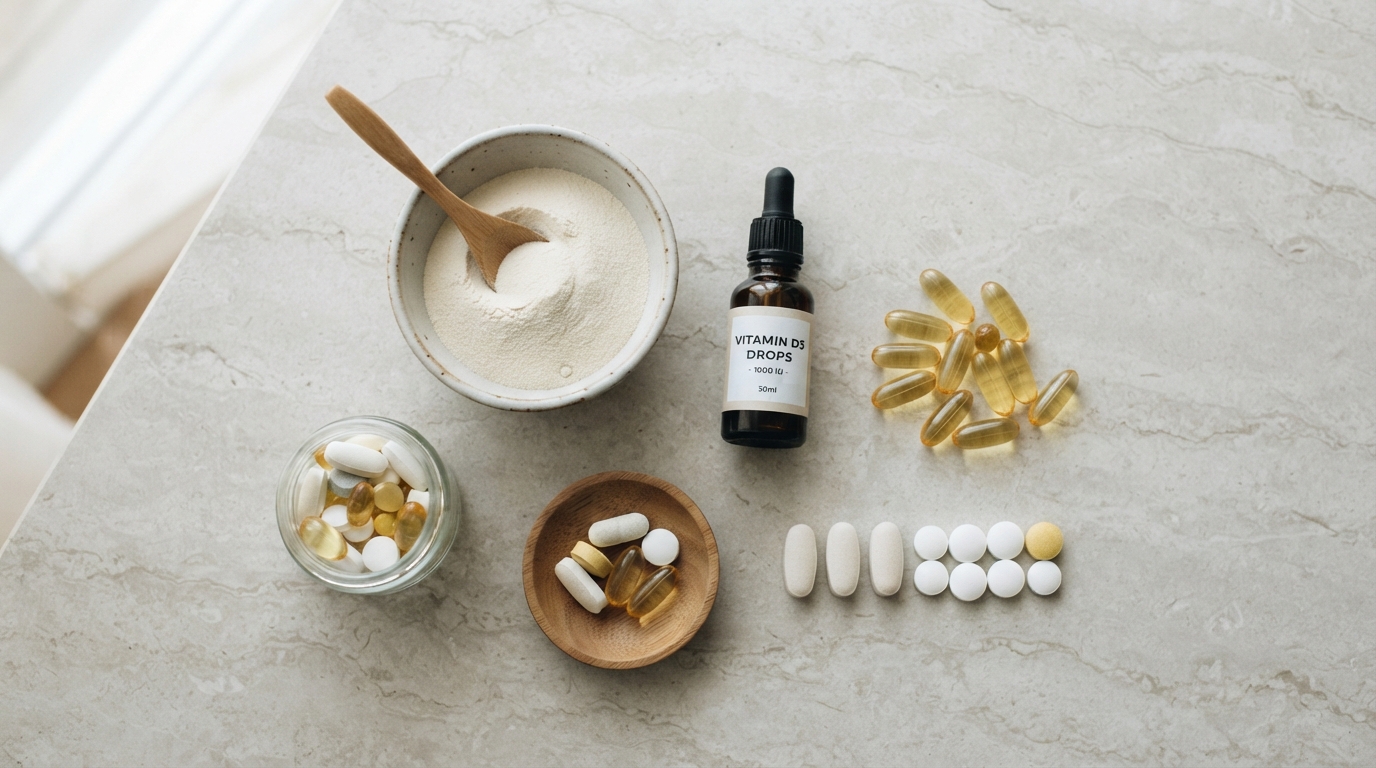
Potency loss is often invisible — you cannot measure it by sight alone. That said, some physical warning signs do exist. Signs to watch for include a strange or sour odor, visible mold or dark spots on capsules, significant changes in color or texture, and softgels that have melted together or become excessively sticky.
In tablet forms, expiration can lead to “capping” or “lamination,” where the tablet begins to crumble or split into layers. For softgels, they may become sticky or clump together. If capsules are fused into a single mass, they have likely been exposed to excessive heat or humidity and should not be used.
Insider tip: amber or opaque bottles are not just for looks. UV light degrades vitamin D, vitamin A, and omega-3 fatty acids. Clear glass bottles look pretty but offer no UV protection. Amber or opaque containers exist for a reason. Also, the cotton ball inside your supplement bottle absorbs moisture during shipping — throw it away after first opening, because it holds moisture against the pills after that point.
Does Vitamin D Expire Sooner With Poor Storage? Best Practices
Storage is the single biggest variable in how long your vitamin D supplement stays potent. Think of your supplement like a candle: the wax does not vanish on a schedule, but leave it in direct sun and it will melt far sooner than expected. The same logic applies here.
According to MedlinePlus, a service of the National Library of Medicine, you should keep vitamin D in the container it came in, tightly closed, and store it at room temperature away from excess heat and moisture — not in the bathroom. Vitamin D supplements should be stored at room temperature, usually between about 68°F and 77°F (20°C and 25°C). Storage requirements may vary slightly among products.
Where Not to Store Vitamin D
- The bathroom medicine cabinet — steam from showers creates the heat and humidity that most accelerate degradation.
- The kitchen windowsill — UV light and temperature swings are damaging.
- Your car glove box — if internal temperatures exceeded 40°C for hours or days, consider replacing heat-sensitive supplements, though creatine, minerals, and vitamin D3 in capsules are more resilient.
Where to Store Vitamin D
- A kitchen pantry away from the stove — cool, dry, and dark.
- A bedroom drawer — consistent room temperature and no light exposure.
- The refrigerator only if the label says so — you should only store vitamin D3 in the refrigerator if the label specifically says to do so. For many liposomal or liquid versions, refrigeration helps maintain the stability of the fats used in the delivery system.
Vitamin D is relatively stable in dry, cool, dark conditions but degrades faster in heat and humidity. Supplements stored properly in cool, dry, dark conditions can retain 90% or more of their potency for years beyond the expiration date.
Vitamin D Expiry and Its Effect on Your Health Goals
Why does potency really matter? Because vitamin D does a lot of important work in the body. According to the NIH Office of Dietary Supplements, in addition to its well-known effects on calcium absorption and bone health, vitamin D plays a role in immune function. Research also suggests links between vitamin D status and mood — people curious about vitamin D and depression should know that getting the full labeled dose consistently is especially important for mood-related goals. Some readers also ask about vitamin D and acne or whether low levels contribute to vitamin D headaches — in all these cases, an under-dosed supplement adds an extra layer of uncertainty.
If you are concerned about too much vitamin D, rest assured that the gradual potency loss in an expired supplement means you are unlikely to overshoot your intake — if anything, the opposite problem (getting too little) is the more practical concern. And for those who have asked whether supplementing affects sleep or causes vitamin D keeping you awake, the timing and dose of a fresh supplement matter more than expiry in that context.
A note on safety: the RDA for vitamin D is 600 IU (15 mcg) for adults aged 1–70 and 800 IU (20 mcg) for those over 70, as set by the National Academies. The Tolerable Upper Intake Level (UL) for adults and children nine and older is 4,000 IU (100 mcg) per day. High-dose regimens — such as whether 10,000 IU of vitamin D is safe — should only be used under medical supervision following a blood test, never as a do-it-yourself plan. If you notice unusual symptoms such as digestive changes and wonder whether vitamin D causes constipation, speak to your doctor, as this can be a sign of too much vitamin D rather than expiry.

When Should You Replace Your Vitamin D Supplement?
Use these practical checkpoints to decide when it is time for a new bottle:
- Past the printed expiration date — especially if you are taking it to correct a confirmed low level.
- Visible signs of degradation — sticky softgels, crumbling tablets, discoloration, or an off smell.
- Stored in poor conditions — if the bottle spent weeks near a stove or in a hot car, the shelf life on the label no longer applies.
- More than 6 to 12 months after opening a liquid form — most liquid vitamin D3 supplements are best used within 6 to 12 months of opening.
- No results despite consistent use — if a blood test still shows vitamin D deficiency after months of supplementing, reduced potency from an old bottle could be one factor worth ruling out.
Practical insider tip: when you buy a new bottle, write the date you opened it with a permanent marker on the cap. This takes five seconds and means you never have to guess how long a bottle has been open.
Frequently Asked Questions
Does an unopened bottle of vitamin D last longer than an opened one?
Yes, significantly. An unopened bottle is sealed against air and moisture, so the contents are protected from two of the main drivers of degradation. Vitamin D softgels sealed in a bottle typically last 2 to 3 years, but after opening, that window narrows to 12 to 24 months due to oxidation of the oil carrier. Once you break the seal, every time you open the lid you expose the contents to air and any ambient humidity. Keep the lid tightly closed between uses.
Can I freeze vitamin D supplements to extend their shelf life?
Freezing is generally not recommended unless the product label specifically says to do so. Condensation forms when a frozen bottle warms to room temperature, and that moisture can accelerate degradation rather than prevent it. For standard tablets and softgels, a cool, dry cupboard at consistent room temperature is a safer and more practical choice. Only liquid vitamin D formulations that specify refrigeration on the label benefit from cold storage.
Does vitamin D2 expire at the same rate as vitamin D3?
Cholecalciferol (vitamin D3) is naturally more stable than vitamin D2 (ergocalciferol), but it still requires a stable “carrier” to remain viable over long periods. In practice, this means D3 supplements may hold their potency slightly longer than D2 formulations under identical storage conditions. For most consumers, the form difference in shelf life is minor; proper storage matters far more than which form you choose.
Do vitamin D gummies expire faster than capsules?
Yes. Gummy vitamins contain sugar and water activity, which make them more prone to moisture absorption, melting, and microbial growth. Chewable or gummy vitamin D supplements are more susceptible to moisture and may expire sooner than tablets or capsules. If you rely on gummies, pay close attention to the best-by date and store them in an airtight container in a cool, dry spot.
Should I tell my doctor if I have been taking expired vitamin D?
It is worth mentioning, particularly if your doctor has ordered a follow-up blood test to check whether your vitamin D level has improved. If you have been using a supplement well past its expiration date, your actual intake may be lower than your recorded dose. This detail could affect how your doctor interprets your results and whether they adjust your supplementation plan. As the NIH Office of Dietary Supplements notes, blood levels of 25-hydroxyvitamin D (the main marker) are the most reliable way to assess your true vitamin D status.
How should I safely dispose of expired vitamin D?
Do not flush supplements down the toilet, as this can affect water quality. According to MedlinePlus, you should dispose of unneeded medications in a way so that pets, children, and other people cannot take them, and not flush them down the toilet — use a medicine take-back program instead. If a take-back program is not available in your area, mix the capsules with something unpalatable like coffee grounds or kitty litter, seal the mixture in a bag, and place it in the household trash.
The Bottom Line
Vitamin D does expire — but the expiry is about potency, not toxicity. The expiration date reflects when the product is guaranteed to maintain its labeled potency when stored as directed, not when it becomes unsafe to use. Tablets and capsules are the most shelf-stable forms, lasting roughly two to three years when kept in a cool, dark, dry place. Liquids and gummies degrade faster, especially after opening. If you are healthy and simply forgot about an old bottle, taking it a few months past the date is unlikely to cause harm. But if you are supplementing for a specific health reason — particularly to address a diagnosed deficiency — replace any bottle that is past its date and store the new one with care. A fresh supplement, stored well, is one of the simplest ways to make sure your vitamin D is actually doing its job.
For further reading, see the NIH Office of Dietary Supplements Vitamin D fact sheet and storage guidance from MedlinePlus on cholecalciferol.
This article is for informational purposes only and is not medical advice. Talk to your doctor or pharmacist before starting any supplement, especially if you are pregnant, breastfeeding, taking medication or have a health condition.