



Yes, you can absolutely take vitamin D and vitamin C together. These two essential nutrients can be taken simultaneously without any known interactions or reduced effectiveness, because they serve different physiological functions and are absorbed through distinct mechanisms in the body. If you have been wondering whether combining them is safe or worthwhile, the short answer is: safe, yes — and there may even be some added perks.

Key Takeaways
- No negative interactions. Vitamin D and vitamin C can be taken together, and there is no evidence suggesting they interfere with each other’s absorption or efficacy.
- Different absorption pathways. Vitamin C is water-soluble and absorbed primarily in the small intestine through specialized transporters that do not involve fat, while vitamin D is packaged into micelles (tiny fat droplets) and absorbed alongside dietary fats.
- Complementary immune roles. Both vitamins are involved in immune function, but they act on different pathways — vitamin C supports innate immunity and acts as an antioxidant, while vitamin D modulates the immune response and reduces chronic inflammation.
- Bone health teamwork. Vitamin C is required to produce collagen, which helps bone stability and resilience to stress and fractures, while vitamin D3 is needed to metabolize calcium and phosphorus and maintain bone density.
- Stay within safe limits. The adult upper intake level (UL) for vitamin D is 4,000 IU per day and 2,000 mg per day for vitamin C from supplements — staying within these numbers keeps the combination safe for most healthy adults.

Can You Take Vitamin D and C Together? Understanding How Each Works
Think of vitamins D and C as two different departments in the same company. They tackle separate jobs using separate tools, but they both work toward the same big-picture goal: keeping you healthy. Understanding what each one does on its own makes it much easier to see why taking them together makes sense.
What Does Vitamin C Do in the Body?
Vitamin C, also known as ascorbic acid, is a water-soluble vitamin with antioxidant properties. According to the NIH Office of Dietary Supplements, it plays a key role in collagen synthesis, wound healing, and the absorption of non-heme (plant-based) iron. Cell culture and preclinical studies have indicated that vitamin C can enhance epithelial barrier functions via a number of different mechanisms — including in the skin and the gut lining. Because it is water-soluble, your body uses what it needs and excretes the rest in urine, so it cannot build up to dangerous levels in tissues the way fat-soluble vitamins can. Insider tip: If you take a high-dose vitamin C supplement and notice loose stools, your body is telling you to dial back — this is called the “bowel tolerance” threshold.
What Does Vitamin D Do in the Body?
Vitamin D is sometimes called the “sunshine vitamin,” but it behaves more like a hormone once it’s inside your body. The active form, called 1,25-dihydroxyvitamin D (or calcitriol), binds to receptors found in nearly every tissue and organ, regulating hundreds of genes. Its most well-known jobs include helping the gut absorb calcium and phosphorus — the minerals that keep bones dense and strong. Vitamin D improves the physical barrier against viruses and stimulates the production of antimicrobial peptides, and it may prevent cytokine storms by decreasing the production of inflammatory cytokines. A lesser-known fact: vitamin D receptors have been found in muscle tissue and brain cells, which is why low levels are sometimes linked to muscle weakness and low mood. You can learn more about the difference between supplement forms in our guide on what is the difference between vitamin D and D3.
Does Taking Vitamin C and D Together Affect Absorption?
Taking vitamin C does not negatively impact vitamin D absorption. In fact, since they are absorbed via different mechanisms — water-soluble versus fat-soluble — there is no known interference when taken at the same time. A useful analogy: imagine two buses running on completely different routes in the same city. They share the same roads, but they never compete for the same passengers.
There is no evidence to suggest that vitamin C inhibits the uptake of vitamin D, nor does vitamin D interfere with the body’s ability to use vitamin C. In fact, some researchers suggest that having a high-antioxidant environment, supported by vitamin C, might even help protect fat-soluble vitamins from oxidation during digestion, though more research is needed to confirm this. One thing that does matter for vitamin D absorption, regardless of what you pair it with: fat. Because vitamin D is fat-soluble, taking it alongside a meal that contains some healthy fat — such as eggs, avocado, or olive oil — meaningfully supports how well your body absorbs it.
What Are the Benefits of Taking Vitamin D and C Together?
While these two vitamins do not directly amplify each other like a chemical reaction, their combined effects on body systems cover more ground than either one alone. Here are the key areas where the pairing may support your health.
Immune System Support
Both the innate and adaptive immune systems are absolutely reliant on appropriate nutritional support for optimal functioning, and of the various immune-supportive micronutrients, vitamins C and D are two of the most well-established. Deficiencies of these vitamins are common in many regions of the world and within specific subpopulations, and deficiencies of these vitamins are known to impair the immune system, resulting in severe respiratory infections. Research published in the journal Cell & Molecular Immunology (Peters et al., 2022) noted that both vitamin C and vitamin D might exert beneficial effects in immune defense, and how the combination of these two vitamins modulates the immune system should be considered. It’s worth noting that most of this research is observational or early-stage, so the exact size of the benefit in healthy, well-nourished adults is still being studied.
If you are also considering other immune-supportive nutrient pairings, our article on can you take vitamin D and zinc together covers another popular combination worth knowing about.
Bone Health
Vitamin D is renowned for its role in calcium absorption, while studies have highlighted vitamin C’s contribution to collagen production, essential for maintaining bone structure and integrity, and research indicates that the combination of both vitamins can help suppress bone loss and promote healthier bones. Think of bone as a reinforced concrete structure: calcium (regulated by vitamin D) is the concrete, and collagen (built with vitamin C) is the rebar. You need both to build something that won’t crack under pressure. Research suggests that combining vitamin C and D may suppress bone loss, and while vitamin D aids calcium absorption essential for bone strength, vitamin C may inhibit osteoclast activity (bone-dissolving cells), promoting better bone health.
Skin and Wound Healing
Both vitamins play a role in wound healing: vitamin C is essential for collagen production while vitamin D enhances skin health. Research shows vitamin D can promote the regrowth of skin cells, which can facilitate wound repair while minimizing scarring. Vitamin C, meanwhile, is one of the most studied nutrients for supporting collagen synthesis — the structural protein that holds skin tissue together. Vitamin C intervention studies in humans have shown enhanced vitamin C uptake into skin cells and enhanced oxidant-scavenging activity of the skin, and the elevated antioxidant status of the skin following vitamin C supplementation could potentially protect against oxidative stress induced by environmental pollutants.
Gut Barrier Integrity
Here is an angle that most people overlook. Recent research has looked into how vitamin C and vitamin D3 might work together to support the gut lining — a strong intestinal barrier is crucial for preventing unwanted substances from entering the bloodstream — and some studies suggest that the combination of these two vitamins may help maintain the “tight junctions” in the gut, supporting better overall digestive health and nutrient absorption. This is a newer research area, and most evidence so far comes from cell and animal studies, so more human trials are needed before firm conclusions can be drawn.
Dosage: How Much of Each Vitamin Should You Take?
Knowing that these two vitamins are safe to combine is only half the picture. The other half is making sure you are taking amounts that are actually helpful — not too little, not too much.
| Nutrient | RDA (Adults) | Upper Intake Level (UL) | Notes |
|---|---|---|---|
| Vitamin D | 600 IU (ages 1–70); 800 IU (over 70) | 4,000 IU (ages 9+) | Take with a meal containing fat for best absorption |
| Vitamin C | 90 mg (men); 75 mg (women) | 2,000 mg (adults) | Doses above 1,000 mg may cause GI upset in some people |
| Vitamin C (pregnancy) | 85 mg | — | Always check with a doctor during pregnancy |
| Vitamin C (breastfeeding) | 120 mg | — | Always check with a doctor while breastfeeding |
| Vitamin D (infants) | 400 IU | 1,000 IU (0–6 months); 1,500 IU (7–12 months) | Only supplement infants under doctor guidance |
According to the NIH Office of Dietary Supplements, 2013–2016 NHANES data showed that 92% of men, more than 97% of women, and 94% of people age 1 year and older ingested less than the estimated average requirement (EAR) of 400 IU of vitamin D from food and beverages. This widespread shortfall helps explain why vitamin D supplementation is commonly recommended. A recent systematic review and meta-analysis found that 51.1% of healthy adults are vitamin D deficient globally, with higher rates in women (56.8%) than men (43.7%).
Important safety note: High-dose vitamin D regimens — such as 10,000 IU or 50,000 IU per day — should only be used under the direct supervision of a doctor after a blood test has confirmed deficiency. Do not self-prescribe doses above the 4,000 IU UL. If you are curious about pairing vitamin D with other nutrients, our guides on can you take vitamin D and B12 together and can you take iron and vitamin D together offer helpful context.
When and How Should You Take Vitamin D and C Together?
Timing your supplements well does not have to be complicated. Here are the practical rules that actually matter.
- Take vitamin D with a fat-containing meal. Because vitamin D is fat-soluble, pairing it with breakfast or lunch that includes eggs, nuts, avocado, or a drizzle of olive oil gives it the best environment for absorption. Many people find the morning most convenient.
- Vitamin C is flexible. Being water-soluble, vitamin C does not need fat to be absorbed and can be taken on an empty stomach. That said, if higher doses (500 mg or more) bother your stomach, taking it with food usually solves the problem.
- You can take them at the same time. Since there is no absorption competition between the two, there is no need to separate them by hours. One glass of water at breakfast with both supplements is perfectly fine.
- Consistency beats perfect timing. Vitamin D3 (cholecalciferol) is the most effective form of vitamin D, and taking either vitamin regularly — even if the timing is not always perfect — will do more for your status than occasional high doses. You can also explore whether omega-3 and vitamin D is a useful stack to add at the same meal, since omega-3 fats may further support vitamin D absorption.
Who Should Be Especially Mindful When Combining These Vitamins?
For most healthy adults, the vitamin D and C combination is low-risk and well-tolerated. There are, however, a few groups who should take extra care and check with a healthcare provider first.
- People with kidney disease: Both excess vitamin D and high-dose vitamin C can put strain on kidneys. Those with chronic kidney disease or a history of kidney stones — particularly calcium oxalate stones — should get personalized guidance before supplementing either vitamin in amounts beyond the RDA.
- People taking blood thinners (anticoagulants): High-dose vitamin C may interact with warfarin. Always consult your doctor or pharmacist if you are on a blood thinner before adding any new supplement.
- Pregnant or breastfeeding individuals: Nutritional needs shift during pregnancy and breastfeeding. Both vitamins are generally considered safe at recommended amounts, but talk to your midwife or OB before starting or increasing any supplement.
- People taking iron supplements: A lesser-known bonus — vitamin C significantly enhances the absorption of non-heme iron. If you are taking iron, spacing it with vitamin C at the same meal can be beneficial. Read more in our article on can you take iron and vitamin D together for related guidance.
Best Vitamin D Supplements to Pair With Vitamin C
Since most multivitamins and standalone vitamin C supplements are straightforward, the product choice that matters most here is vitamin D. Below are three widely available, well-regarded options — chosen for their transparency, form, and quality credentials. These are descriptions based on brand information; we have not independently tested them.
Nature Made Vitamin D3 2000 IU Softgels
Brand: Nature Made (naturemade.com)
Key features: Nature Made Vitamin D3 2000 IU (50 mcg) supports bone, teeth, muscle, and immune health. Take one softgel daily to help raise and maintain healthy vitamin D levels. According to the brand, this product carries USP Verification — meaning an independent organization has tested and confirmed the ingredients, potency, and manufacturing process meet established standards. It is gluten-free, with no artificial flavors or added colors. Nature Made was ranked #1 for Best Vitamin D Supplements in a U.S. News & World Report survey of 357 pharmacists in 2025.
Best for: Adults looking for a reliable, affordable, widely available daily vitamin D supplement with third-party quality verification. The 2,000 IU dose sits comfortably below the 4,000 IU UL for adults.
Keep in mind: The softgel contains gelatin, so it is not suitable for vegans or vegetarians. Those who need higher doses should speak to a doctor before going above the UL.
Thorne Vitamin D + K2 Liquid
Brand: Thorne (thorne.com)
Key features: According to Thorne, the combination Vitamin D + K2 formula is ideal for those wanting to support bone, cardiovascular, and immune health. Each serving (2 drops) provides 25 mcg (1,000 IU) of vitamin D3 and 200 mcg of vitamin K2 (as MK-4). The brand describes how vitamin D enhances the absorption and retention of calcium, while vitamin K2 helps direct the absorbed calcium into bones and teeth — and keep it out of soft tissues like arteries and kidneys. The liquid is gluten-free, dairy-free, and soy-free, and Thorne products are manufactured in NSF-registered facilities.
Best for: Adults interested in a D3-plus-K2 approach for bone and cardiovascular support who prefer a liquid format with flexible, drop-by-drop dosing. Also a good option for those who have difficulty swallowing capsules.
Keep in mind: Vitamin K2 may interact with blood-thinning medications such as warfarin. If you take anticoagulants, check with your doctor before using any product containing vitamin K. The dose per serving is 1,000 IU, so you may need multiple drops if a higher dose is recommended by your physician.
Garden of Life Organics Vegan D3 Spray
Brand: Garden of Life (gardenoflife.com)
Key features: According to Garden of Life, this is a whole-food liquid vitamin D3 formula that is both certified USDA Organic and Non-GMO Project Verified, with immune system support, promotes calcium absorption for healthy bones, and provides 1,000 IU of vegan vitamin D3 per serving in an easy-to-use vanilla spray. The D3 comes from lichen (a plant organism) rather than lanolin, making it one of the few true vegan cholecalciferol sources. Since vitamin D3 is fat-soluble, the spray also includes organic plant omegas — from organic pumpkin seed oil and organic cranberry seed oil — to support absorption. The product is also certified gluten-free and Vegan Society certified.
Best for: Vegans, vegetarians, and anyone who prefers an organic, plant-based supplement without pills. The 1,000 IU dose per spray makes it easy to adjust the amount based on individual needs or physician guidance.
Keep in mind: At 1,000 IU per spray, those with confirmed deficiency who need higher therapeutic doses may need multiple sprays. Confirm the appropriate amount with your healthcare provider. The spray format can feel unusual if you are accustomed to capsules or tablets.
For a broader look at what to look for when shopping, visit our dedicated guide on the best vitamin D supplement options available today.

Frequently Asked Questions
Does vitamin C help vitamin D work better in the immune system?
These two vitamins support immune function through different, complementary pathways rather than directly enhancing each other’s mechanism. Research highlights the multiple levels of immune support provided by vitamins C and D, including prevention of infection, attenuating infection symptoms and severity, adjunctive therapy for severe disease, and immunization support. Most of this evidence comes from observational studies and population data rather than controlled trials specifically on the combination, so while the pairing is sensible, it is not a guarantee of immune protection. Eating a balanced diet and avoiding deficiency in both nutrients is the practical takeaway.
Can you get too much vitamin D or vitamin C when taking both together?
Toxicity from the combination is unlikely if you stay within recommended limits, but each vitamin does carry its own upper limit. For vitamin D, the adult UL is 4,000 IU per day from supplements; going above this over the long term without medical supervision may cause hypercalcemia (high blood calcium), which can affect the kidneys. For vitamin C, the adult UL is 2,000 mg per day; amounts above this are not necessarily toxic but can cause diarrhea and gastrointestinal cramping in many people. Taking both vitamins together does not raise the UL for either one — they are assessed independently.
Is it safe to take vitamin D and C together with other vitamins like B12 or zinc?
In general, vitamin D can be taken with other vitamins, like vitamin B12 and C. Many people stack multiple supplements without problems, but it is good practice to look up any pair you are unsure about. Our articles on can you take vitamin D and B12 together and can you take vitamin D and zinc together provide specific guidance on those pairings. If you are on prescription medications, always check with your pharmacist before starting any new supplement combination.
Should I take a combined vitamin D and C supplement or separate products?
Both approaches work, and the best choice depends on your specific dosage needs. Combined products can simplify your routine, but they lock you into a fixed ratio that may not match what you personally need. For example, if your doctor determines you need 2,000 IU of vitamin D but only a maintenance dose of vitamin C, separate supplements give you more control. You can also find both nutrients in a multivitamin, which is a convenient way to not only get vitamin C and D but an array of other key vitamins and minerals. Just check the label so you know how much of each you are actually getting.
Does vitamin C help with vitamin D deficiency?
Not directly. Vitamin C does not raise your vitamin D blood levels, nor does it replace sunlight or supplementation as a source of vitamin D. The two vitamins work on separate biological systems. If you are concerned about low vitamin D levels, a blood test (25-hydroxyvitamin D test) ordered by your doctor is the right first step. Once deficiency is confirmed, a targeted vitamin D supplement — at a dose your doctor recommends — is the appropriate response. Vitamin C is still a good nutrient to include for its own reasons, just not as a treatment for low vitamin D.
What foods naturally contain both vitamin D and vitamin C?
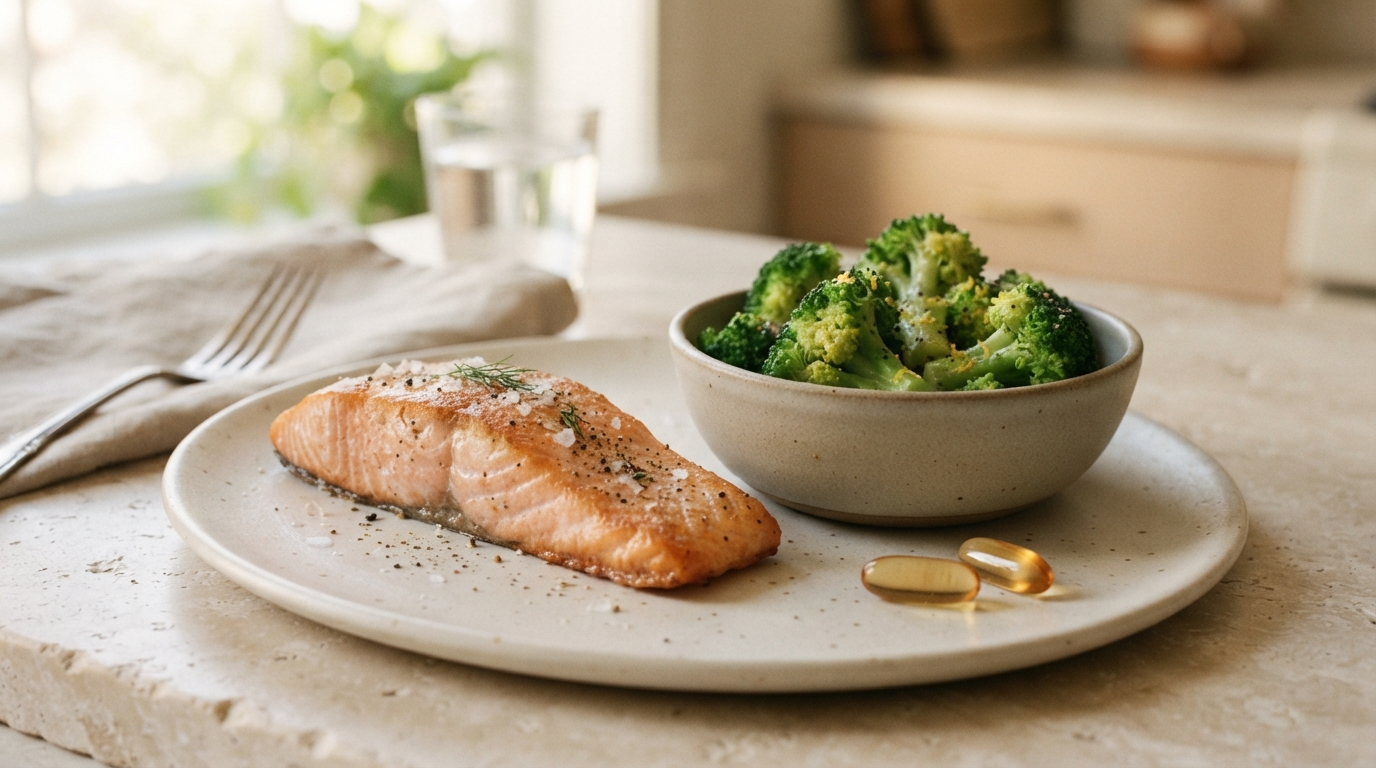
Very few foods are rich in both at the same time, since vitamin D is mostly found in fatty fish (such as salmon and sardines), egg yolks, and fortified dairy products, while vitamin C is concentrated in citrus fruits, bell peppers, strawberries, kiwi, and broccoli. Building a diet that includes both food groups is a practical way to cover your bases before relying on supplements. One interesting lesser-known fact: raw bell peppers actually contain more vitamin C per gram than most citrus fruits, making them an exceptionally efficient source. Salmon, meanwhile, is one of the few foods that provides both a useful dose of vitamin D and the omega-3 fats that help it absorb — a neat natural pairing that mirrors the supplement advice above.
The Bottom Line
Taking vitamin D and vitamin C together is safe, practical, and may support immune health, bone strength, and skin repair in ways that complement each other. These two vitamins use different pathways in the body and different mechanisms for absorption, and because they do not compete, you can take them at the same time without worrying about wasting your supplements. Focus on staying within the recommended daily amounts, pairing vitamin D with a fat-containing meal, and choosing products that have been verified by an independent quality organization. And if you are dealing with a confirmed deficiency or any underlying health condition, your doctor should always be part of the conversation. For more on building a smart vitamin D routine, explore our guide to omega-3 and vitamin D and our full review of the best vitamin D supplement options.
This article is for informational purposes only and is not medical advice. Talk to your doctor or pharmacist before starting any supplement, especially if you are pregnant, breastfeeding, taking medication or have a health condition.






One thought on “Can You Take Vitamin D and C Together? Safety & Benefits”